Quantum computers are attracting attention as the next generation of computing, with performance that surpasses that of conventional computers and the potential to solve previously unsolvable social problems. On the other hand, the practical application of quantum computers is supported by conventional computers (classical computers), and in order for many people to make effective use of quantum computers, it is essential that the software infrastructure responsible for their control and operation matures.
SEC has carved out a unique position in the research and development of this quantum middleware before other software companies. We contribute to the spread and market creation of quantum computers with middle layer software technology.
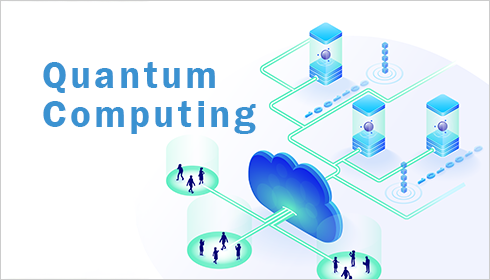
Extensive track record and development capabilities cultivated with classical computers
Quantum computers are powered by conventional computers, which require advanced software development capabilities cultivated in the existing computer field. SEC has a proven track record of development in a wide range of fields from social infrastructure to space and mobile fields, as well as real-time technology and project management capabilities that enable the development of highly reliable software.
Alliances with major research institutions in Japan
SEC is continuing with joint research with research institutions in Japan that have quantum computers, creating an environment where actual quantum computers can be used. Since starting joint research with The University of Osaka in 2022, we have built upon technologies and knowledge premised on real-world quantum computer systems through collaboration with various players, including research institutes and manufacturers.
One of the few software companies with mid-to-low layer technologies
Through joint research with institutions including The University of Osaka, SEC has developed "OQTOPUS," basic software for quantum computers. SEC is one of the few software companies that possess mid-to-low-layer technologies required to operate quantum computers at the actual machine level. Thus, we support their stable operation and practical application.
In order to run useful and practical applications on quantum computers in the future, we are tackling the development of mid-to-low layer basic software that controls and operates quantum computers.
SEC is collaborating with The University of Osaka and other institutions to develop a cloud environment for use by many people and technology for faster and more efficient use of quantum computation, which includes basic functionality like device control, job management, and schedulers. Of these, the provision of the quantum multiprogramming function, which runs multiple quantum programs simultaneously, as a cloud service was a world-first. The results of this research and development have been released as OQTOPUS, a basic software suite for quantum computing cloud services, in March 2025. It is now publicly available as open-source software.
A quantum computer is a system that operates in unison with various peripheral devices such as cryocoolers and control equipment. In order to enhance the visibility of the entire complex system, we are working on the development of an infrastructure to monitor the status of various hardware and software components of the quantum computer across the board, and to collect and store data.
In order to utilize quantum computers as social infrastructure, it is essential to improve reliability through stable operation and prompt fault detection. We are conducting research on fault detection technology for the entire system that makes up a quantum computer, and are conducting research and development of a mechanism to support early anomaly detection and stable operation.
In addition to middleware, we are also researching applications that utilize quantum computers to solve social issues. Quantum AI (quantum machine learning) is a promising area of application for quantum computers. SEC is engaged in research for the use of quantum computers in fields such as social infrastructure, space, and robotics, with a focus on quantum AI.
- Center for Quantum Information and Quantum Biology, The University of Osaka
Our joint research efforts are centered on the framework of the Quantum Software Research Hub (QSRH). - KDDI Corporation
We jointly submitted a proposal to NEDO's "Research and Development Project of the Enhanced Infrastructures for Post-5G Information and Communication Systems / Development of Middleware for Industrialization of Quantum Computers", which was adopted and we are working on the research project. - RIKEN
- National Institute of Advanced Industrial Science and Technology (AIST)